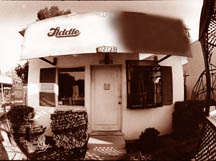
Liddle Shop, Woodland Hills, CA
I began building custom surfboards in 1968 after doing
surfboard repairs and selling Yater and Jacobs surfboards
from my tiny shop in Woodland Hills, California.
Origins
Liddle Shop, Woodland Hills, CA
I
began
building custom surfboards in 1968 after doing
surfboard repairs and selling Yater and Jacobs surfboards
from my tiny shop in Woodland
Hills, California.
My first board designs
were long boards based on the Yater "Spoons" that I rode
and sold. I was also influenced by the very parallel outlines
that Mickey Dora
rode at Malibu duringthe early and mid 1960's made by Jacobs,
Sweet and
Greg Noll; and especially by the Yaters and the Noll "Da Cat".
Then came the short
board revolution.
I was particularly influenced by the designs
of George Greenough
after watching Nat Young surf Malibu on a
Greenough
inspired Keyo surfboard one day at Malibu "First
Point".
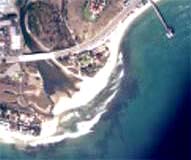
Malibu Point
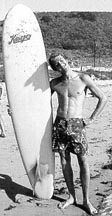
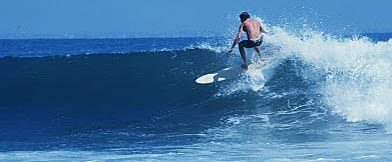
Nat Young Nat Young Keyo Malibu First Point
I made some very crude versions of that concept and was excited over
this new approach to riding waves.
I made everything imaginable over the next twenty
years following the design trends
that developed from the Australian and Hawaiian short board output.
However, a few good freinds and I concentrated on the designs that were
the offspring of that first Greenough inspired Keyo.
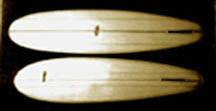
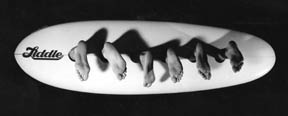
Keyo Influenced First Boards Six Footer
We experimented
with every aspect of the design, taking each to their extreme.
Lengths down to 5'5", thickness to almost zero: replicating
in stand up form the
spoons that Greenough rode on his knees.
We tried very round bottom shapes, very thin tapered rails, very
wide noses plan shapes.
We moved the wide point forward and back,
from a foot or more ahead of center
and then incrementally back depending
on the length of turn desired.
The results, depending
on the individual was an array of outlines that were
appropriate
for each at the surf spots they most frequented and their
style of surfing.
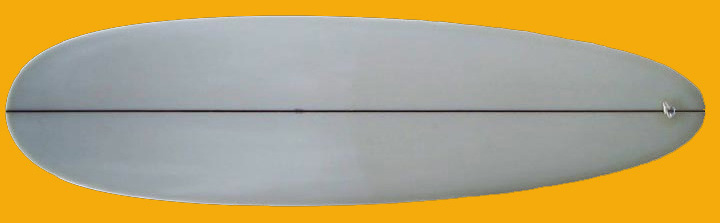
Steve Krajewski Dirt Machine
The extreme shapes designed for the down
the line surfing in California point surf,
particularly Malibu,
were not easy to ride because the rail turning style
had to be
conciously developed. The natural tendency is to pivot turn off
of the
back foot and these boards were full rail turning machines.
Stand forward, lean over and push off both feet to drive them
down the line.
The results and feeling of that style of surfing,
for us were very rewarding and unique.
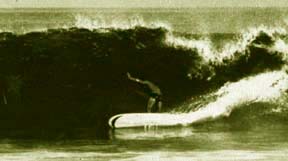
Steve Krajewski- Malibu
So for those twenty
years the boards which I choose to call "displacement hulls",
short for "transitional volume displacement hulls",
became more refined
and efficient in the surf they
were designed to ride best........the small point surf of California.
I moved to Hawaii
in 1991 and had to adapt the California based designs to Hawaiian
surf.
I added length for better paddling, added some volume, narrowed
the outlines and extended the nose rocker.
The result was
a more versatile design that would ride a variety of surf, from
knee
high to several feet over head. The boards still retained
the "modified hull" feeling,
down the line trim speed,
smoothness and added easier wave catching ability.
They catch
waves very easily relative to their length because of the volume,
bottom shape and overall design concept.
I added
many of these changes to the first boards I was sending back
to the mainland.
They were not as extreme as many of the shapes of the 70's and early
80's .
They were more "user friendly" and much
easier to ride in my opinion,
with the added volume, a bit more
rocker for and aft and less extreme in bottom shape.
Since then many have now tried and learned to ride these designs and began
requesting more extreme versions like the ones made in the previous era.
Many new shapes have now evolved from their input and from their requests.
And as the shapes evolved in the past they are evolving again.
I am now offering many more outlines
in various lengths that should cover a large range
of surf and
satisfy those who want to experience the feeling of
the "modified
displacement hull" in the waves they ride.